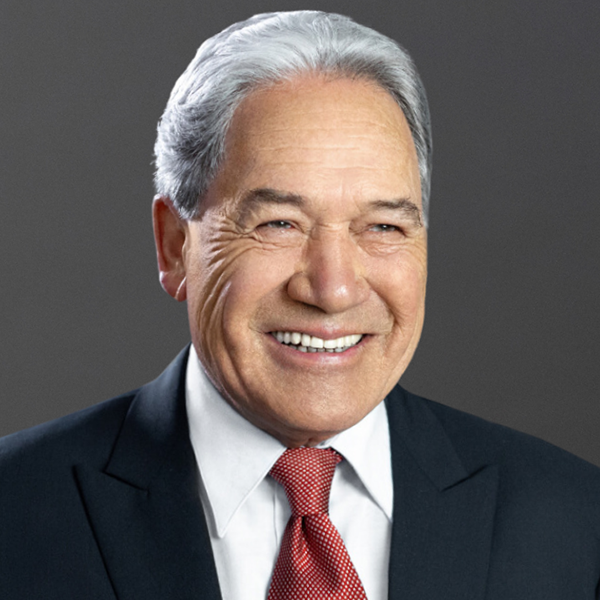
New Zealand First
Position: Populist/Nationalist l Leader: Winston Peters l Currently: Coalition partner, Peter was Deputy PM until May 2025
Website: New Zealand First - NZ First
Party History
What they stand for
New Zealand First is populist and nationalist - centred on the idea of putting New Zealand and New Zealanders first. Peters has governed with both Labour and National, always securing the balance of power. The party defends senior citizens, opposes mass immigration, supports economic nationalism (keeping wealth in NZ), and has grown increasingly culturally conservative.
Sovereignty: NZ first in all decisions; sceptical of foreign influence, globalism, and international bodies having authority over NZ.
Immigration: Against 'unfocused' mass immigration; migrants to sign a 'Kiwi values statement' covering democracy, the flag, and NZ values
Economy: Economic nationalism - limiting foreign land and asset ownership; targeted government investment; proposed buying back the BNZ (Bank of New Zealand)
Superannuation: The strongest defender of NZ super at age 65 - supports no raise of the retirement age
Language: Pushed for English to become NZ's official language
Treaty: Opposes co-governance
Maori: Campaigning on a referendum to abolish the Maori electorates; opposes Maori names for government departments
Regional development: Shane Jones secured major provincial investment, resource extraction, and infrastructure through the Fast-track Approvals process
Gender: Pushed legislation defining 'woman' as a biological adult human female; introduced single-sex bathroom requirements in public buildings
Foreign policy: Negotiated key Pacific relationships; cautious of Chinese influence; involved in repairing Cook Islands relationship
Senior citizens: Free off-peak public transport (SuperGold Card); free doctor visits for under-6s
Winston Peters founded New Zealand First in 1993 after being expelled from the National Party for publicly criticising their economic reforms (Rogernomics). Peters had been a National MP since 1979 and was popular in Tauranga and among Maori voters.
1996: Won 17 seats in NZ's first MMP election (The parties best ever result). Formed a coalition with National; Peters became Deputy PM and Treasurer
1998: Coalition with National collapsed after Shipley replaced Bolger as PM
1999-2005: In opposition
2005-2008: Confidence and supply with Labour; Peters served as Foreign Affairs Minister
2008: Donation scandal involving Owen Glenn and the Vela family donations; party fell below 5% threshold and was wiped from Parliament
2011: Resurgence - won 6.8% and 8 seats. Peters returned to Parliament
2017: Won 7.2% and 9 seats; Peters chose to form a coalition with Labour (despite National winning more votes), making Jacinda Ardern PM. Peters served as Deputy PM and Foreign Affairs Minister
2020: Catastrophic result - fell to 2.6%, lost all seats and was wiped from Parliament again
2023: Won 6.08% and 8 seats. Peters chose National and formed a three-party coalition as the third partner. Served as Deputy PM until May 2025 when Seymour rotated into the role
Key Policies
Winston Peters l Born: 11 April 1945, Whangarei l MP for: List MP l Role: Foreign Affairs Minister & formerly Deputy PM May 2023-May 2025
Winston Peters was born in Whangarei on 11 April 1945, the son of a Māori father and a Scottish mother. His brothers Ian Peters and Jim Peters both served as MPs. Peters attended Whangarei Boys' High School before studying at the University of Auckland earning a Bachelors of Arts and a Bachelors of Law. Before entering politics, he worked as both a primary and secondary school teacher, and practised as a Barrister and Solicitor, including running his own law firm. Peters also a former New Zealand Māori rugby representative.
Peters was first elected to Parliament in 1978 for the National Party in the Hunua electorate and has served as an MP in 13 different Parliaments - though not consecutively, having been twice wiped from Parliament. Peters became MP for Tauranga in 1984, a seat which he held until 2005. He served as the Minister of Māori Affairs from 1990 to 1991 under Jim Bolger. However Peters constantly criticised the Rogernomics-style economic reforms the party was pursuing and eventually was expelled from the National Party. After his expulsion from National, Peters formed New Zealand First in 1993. In the first MMP (Mixed Member Proportional) election of 1996, NZ First won 17 seats, forming a coalition with National becoming Deputy Prime Minister and Treasurer under Jim Bolger. The coalition collapsed in 1998 after Jenny Shipley replaced Bolger. After rebuilding NZ First, Peters supported Helen Clark's Labour government, then joined as Foreign Affairs Minister from 2005. In 2008 Peters was involved in donation scandals causing NZ First to fall below the 5% threshold and Peters to lose his seat, therefore wiping NZ First from Parliament. In 2017 Peters formed a coalition with Labour making Jacinda Ardern Prime Minister and serving as Deputy Prime Minister and Foreign Affairs Minister. In 2020, NZ First fell again to 2.6% below the threshold wiping NZ First from Parliament yet again. In 2023, Peters formed a coalition with National winning 6.08% and 8 seats. Peters became Deputy Prime Minister for the first half of the term and is again the Foreign Affairs Minister.
Peters has been notably private about his personal life. However, has acknowledged at various times having children from different relationships. Peters is perhaps the most polarising figure in NZ politics, while having one of the longest political careers in New Zealand history.
The Leader